Roger S. Wieck, 1952 to March 13, 2026

Roger S. Wieck died Friday following lengthy treatment for cancer. He had just retired from the Morgan Library & Museum (on January 1) where he served for many years as the Melvin R. Seiden Curator and Department Head of Medieval and Renaissance Manuscripts. Some of you will have met Roger last summer when he generously volunteered to show Morgan manuscripts to conferees at the EBS NYU meeting.

Roger was a prolific author and essayist. His books include Time Sanctified: The Book of Hours in Medieval Art and Life (1988); Painted Prayers: The Book of Hours in Medieval and Renaissance Art (1997); Miracles in Miniature: The Art of the Master of Claude de France (2014); and The Medieval Calendar: Locating Time in the Middle Ages (2017). He also provided introductory commentaries to manuscript facsimiles, including The Prayer Book of Anne de Bretagne (1999), The Prayer Book of Claude de France (2010), The Primer of Claude de France (2012), The Van Damme Hours (2013), and The Hours of Henry VIII (2016).

Roger was a good friend to the Early Book Society and to so many people. His lectures, which were always pristine in their presentation, were beautifully illustrated and delivered. He was extraordinarily generous with his time, attending to students and their professors alike. He also taught for many years at the Rare Book School at the University of Virginia.
I shall very much miss seeing him when I return to the Morgan Library Reading Room.  
— Martha Driver
Introduction to the Hispanic Society Museum and Library

A visit to the Hispanic Society Museum and Library was on the program of the 2025 conference of the Early Book Society but had to be cancelled because of a perfect storm of complications. In lieu of that visit, this video provides a wonderful survey of the Hispanic Society’s holdings and history. Find out even more at the Society’s website here.

Courses at the London International Palaeography School

The London International Palaeography School is a series of intensive courses in Palaeography and Manuscript Studies.

The in-person Summer School runs annually at Senate House, London (this year from 9-13 June), while online courses run throughout the year.  A limited number of bursaries are available.  

In-person courses this year include a practice-based course on making medieval manuscripts, courses on Early Modern English palaeography, an introduction to writing in the early Frankish world, a course on illustrated manuscripts from Florence, and a week-long introduction to working with manuscripts.  Online courses deal with medieval Latin, French, and Spanish palaeography, as well as manuscript layout.

A discount of 10% will apply to all Summer School bookings made before 4 January 2025. Please use the code LIPS10 at the checkout.

More information about the Summer School can be found here: https://ies.sas.ac.uk/london-international-palaeography-school

More information about online courses can be found here: https://ies.sas.ac.uk/london-international-palaeography-school/short-courses

Mary-Jo Arn, 1942-2024

Our friend and long-time EBS member Mary-Jo Arn died in Dorchester, MA, the week before last. The circumstances remain unclear. According to reports, she was on her way to the library (the best place for scholars to be) when she was hit by a car (or fell?) though she sustained no bruises or broken bones. Recently, she had made a remarkable recovery from a stroke that, however, had impaired her eyesight which may have been a factor. The fall caused an inoperable brain bleed.

I remember Mary-Jo from meetings of the Medieval Club of NY, the Medieval Academy, the York Medieval Conference, Kalamazoo, and Early Book Society conferences and meetings. She was a leading expert on the poetry and texts of Charles d’Orléans and published a volume in the EBS series Texts & Transitions, The Poet’s Notebook: The Personal Manuscripts of Charles d’ Orléans (Paris, BnF, MS fr. 25458) in 2008, which received positive reviews in Speculum, Philological Quarterly, and Medium Aevum, among others. We also remember her work as Reviews Editor at Speculum. Mary-Jo had just received her copy of the new Oxford Chaucer edition to which she had spent many years contributing and had started on a new research project. Dorothy Africa wrote, “We are all sad to lose our friend and gifted scholar, but I am thankful that she left us on a personal high point with an ambitious research project before her.” I await information on a charity or not-for-profit to which donations might be made in her memory, and I wish to thank Dorothy Africa and Jenna Mead for contacting me.

Martha Driver

News from Rare Book School

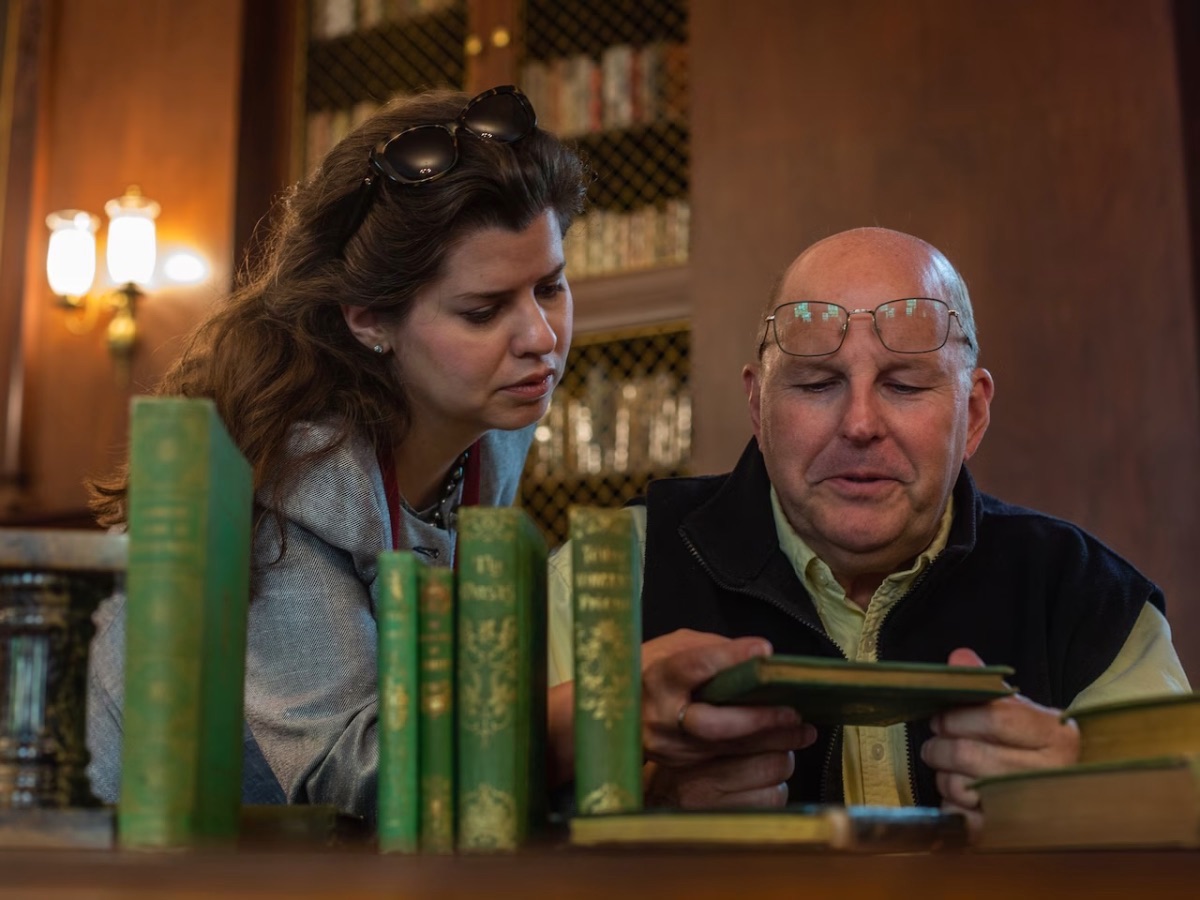
RBS’s Barbara Heritage and faculty member Todd Pattison look at “poison books” in UVA Shannon Library’s McGregor Room. Photo by Cal Cary; courtesy of the Washington Post.

Rare Book School was recently featured in a Washington Post article about “poison books.” The story included pictures of RBS staff member Barbara Heritage and RBS faculty member Todd Pattison in UVA Shannon Library’s McGregor Room (affectionately known as the “Harry Potter Room,” right down the hall from our offices). 

Pattison, who taught an RBS course on nineteenth-century American bookbindings in Charlottesville in mid-July, talked with the Post about his collection of rare books that contain arsenic. Students taking his course were able to see his “poison books” up close. According to Pattison, “We look at them differently and take special care, but it’s a great reminder we still have so much to learn about these cultural artifacts.”

Find more Rare Book School news here.

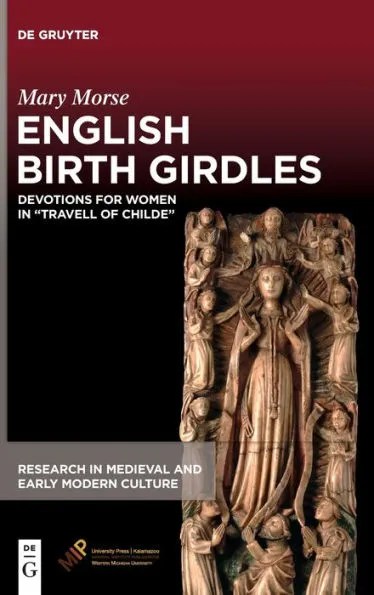
New from Mary Morse: English Birth Girdles: Devotions for Women in “Travell of Childe”

Book description from De Gruyter’s website: In medieval England, women in labor wrapped birth girdles around their abdomens to protect themselves and their unborn children. These parchment or paper rolls replicated the “girdle relics” of the Virgin Mary and other saints loaned to queens and noblewomen, extending childbirth protection to women of all classes. This book examines the texts and images of nine English birth girdles produced between the reigns of Richard II and Henry VIII. Cultural artifacts of lay devotion within the birthing chamber, the birth girdles offered the solace and promise of faith to the parturient woman and her attendants amid religious dissent, political upheaval, recurring epidemics, and the onset of print.

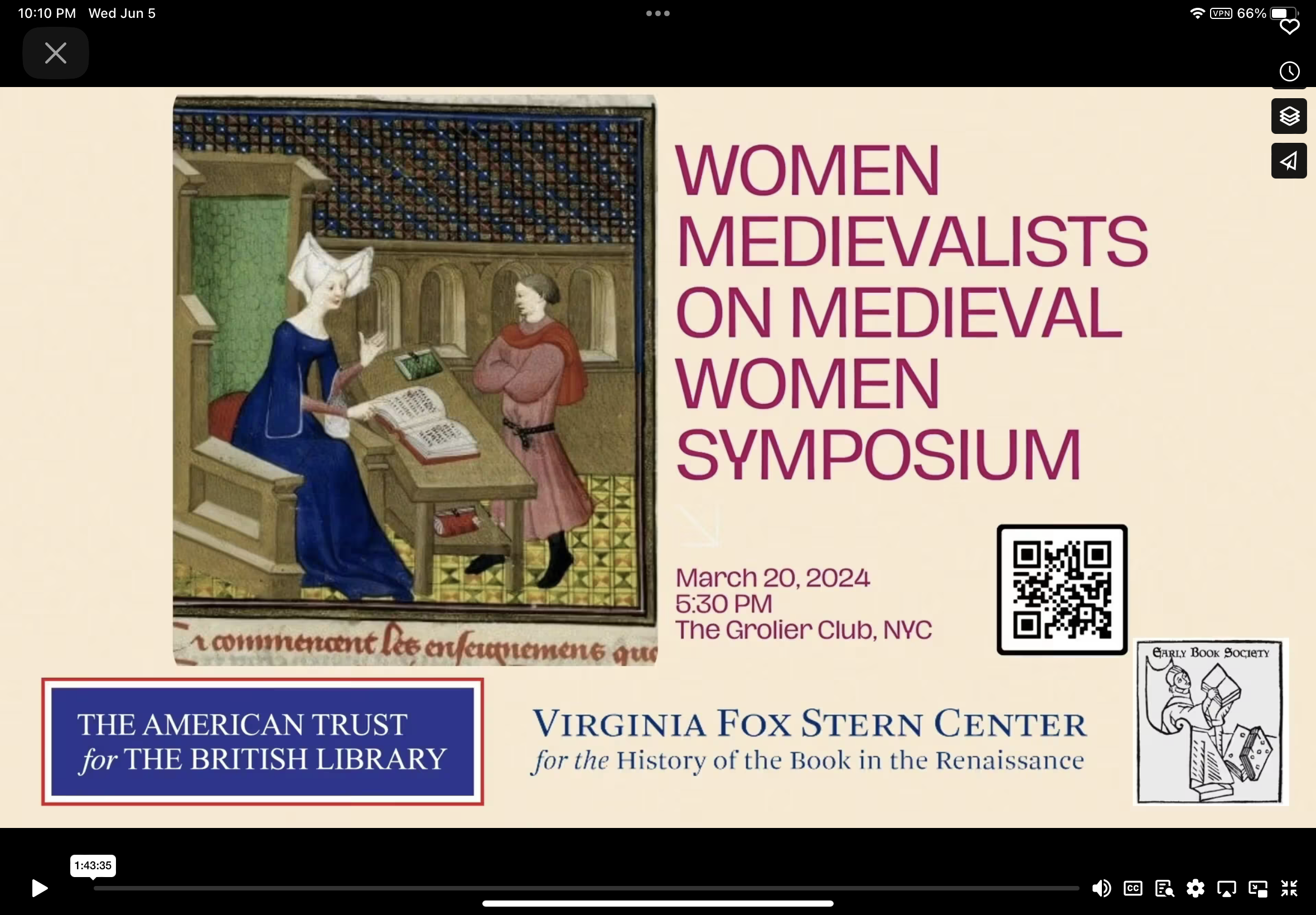
Video recording of ATBL Women Medievalists on Medieval Women Symposium

This symposium took place on March 20, 2024 and was announced at this site in this post here. Click on the image below to go to the recording.

IMG_0046

The exhibition is written up in the events section of the spring newsletter. October 25–March 2, 2025 Medieval Women: In Their Own Words, an exhibition at the British Library, London, curated by Ellie Jackson and Julian Harrison, and supported by Joanna and Graham Barker, which highlights women’s achievements and contributions to the arts, healthcare, and society, among other themes, between 1100 and 1500. See https://blogs.bl.uk/digitisedmanuscripts/2024/03/exhibition-on-medieval-30 women.html.

Harlaxton Medieval Symposium 2024

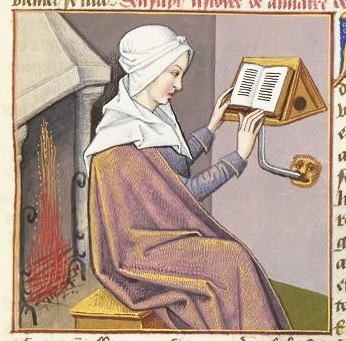
Illustration from De Mulierbus Claris by Boccaccio (Wikimedia Commons).

Women in Late Medieval Britain: Makers, Patrons, and Readers

The 2024 Harlaxton Medieval Symposium will take place between Monday 12th and Thursday 15th August and the theme will be Women in Late Medieval Britain: Makers, Patrons, and Readers. It will be convened by Marlene Hennessy and Martha Driver.

Full details, including a programme, pricing, and how to book, will be available shortly, and booking will open in the Spring.

One important change is that the Symposium will not be hosted at Harlaxton Manor, but instead at Madingley Hall, Cambridge. Please see the statement below for further information:

In a decision that has not been taken lightly, the Symposium will this year be hosted at Madingley Hall, just outside Cambridge. For a variety of reasons, Harlaxton College and the University of Evansville have resolved that they can no longer accommodate the needs of the Symposium. We are naturally deeply saddened that the 40-year long association between the Symposium and the manor has come to an end and appreciate that many attendees have fond memories of the building as much as the Symposium itself. We will retain the name ‘Harlaxton Medieval Symposium’ in recognition of the Symposium’s history and achievements; not least our long-standing series of proceedings, Harlaxton Medieval Studies, now in its thirty-second volume with Medieval Travel which was published last year.

We are thrilled to move the Symposium to Madingley Hall, which will be an excellent venue as the Symposium enters this new phase. It is a charming and historic building with extensive grounds and state of the art conference facilities. We are sure that many of you will be relieved to hear that all bedrooms are en suite! It is situated just 4 miles from central Cambridge and the surrounding area offers plenty of historic locations for the Symposium’s trips. We are sure that the move to Madingley will retain the wonderful social – as well as academic – aspects of Harlaxton that make this such a special event for so many people.

Peter Selly Fellowship

The Peter Selley Fellowship for Members of the Book Trades at the Bodleian Libraries is open to applicants pursuing a career in book or MS auctions or the antiquarian book trade. The Fellowship honors the memory of Peter Selley, a rare book specialist and auctioneer who worked at Sotheby’s in London for 28 years who died in 2021 and provides support for the successful applicant to carry out research in the special collections of the Bodleian Libraries. Peter Kidd was the first fellow in 2023/24, researching ‘The Illuminated Cuttings of William Young Ottley.’

Women Medievalists on Medieval Women: A “State-of-the-Field” Symposium and Reception

Women Medievalists on Medieval Women: A “State-of-the-Field” Symposium and Reception
March 20, 2024
5:30 PM ET
The Grolier Club
47 East 60th St, NYC

Join The American Trust for the British Library (ATBL) and scholars of medieval studies for a “state-of-the-field” symposium at the Grolier Club to discuss current scholarship by female-identifying medievalists on subjects related to the lives, patronage, and creative practice of medieval women.

This symposium celebrates the British Library’s longstanding support for scholarship on women’s experiences during the early modern period, notably and upcoming Library exhibition on medieval women, and the Library’s Joanna and Graham Barker-funded Medieval and Renaissance women digitization project (which successfully concluded in 2023 with the digitization of 93 volumes, 219 charters, and 25 rolls connected to the lives of European women between the years 1100 and 1600 C.E.).

The symposium will be moderated by Martha Driver.

Speakers include:
Cynthia Hahn
Marlene Hennessy
Kristen Herdman
Katherine Hindley
Nicole Lopez-Jantzen
Kavita Mudan Finn
Nicole Rice
Kathryn Smith

For further details and to register, go to this site here.