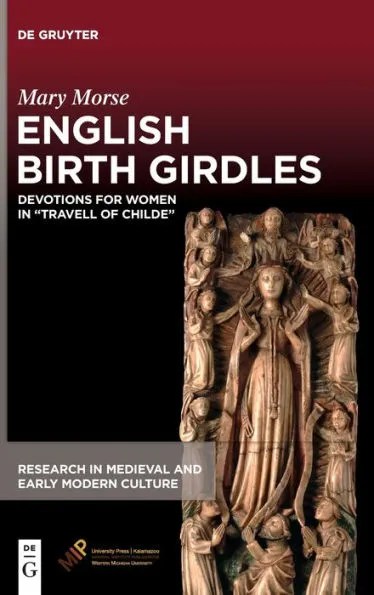
Book description from De Gruyter’s website: In medieval England, women in labor wrapped birth girdles around their abdomens to protect themselves and their unborn children. These parchment or paper rolls replicated the “girdle relics” of the Virgin Mary and other saints loaned to queens and noblewomen, extending childbirth protection to women of all classes. This book examines the texts and images of nine English birth girdles produced between the reigns of Richard II and Henry VIII. Cultural artifacts of lay devotion within the birthing chamber, the birth girdles offered the solace and promise of faith to the parturient woman and her attendants amid religious dissent, political upheaval, recurring epidemics, and the onset of print.
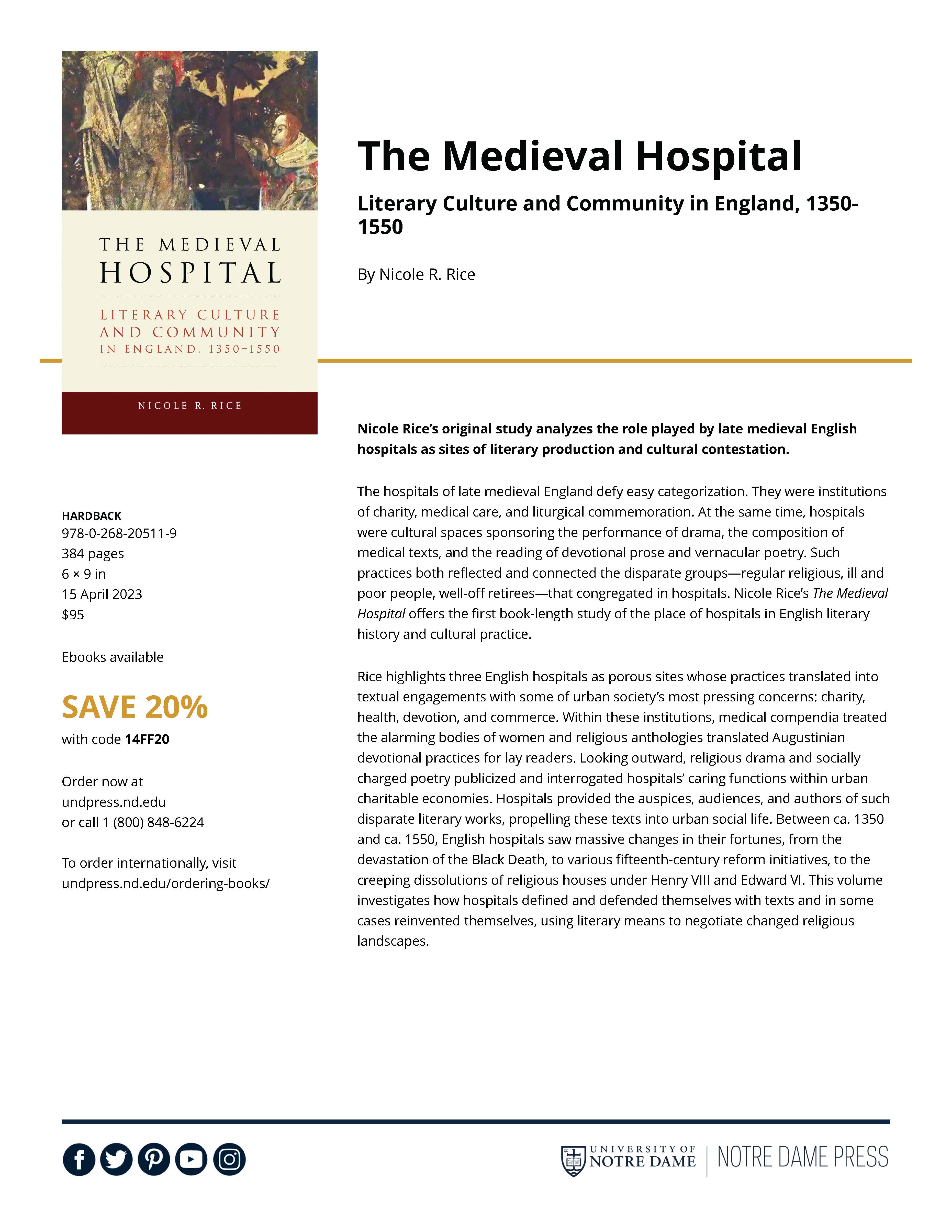
Nicole Rice’s original study analyzes the role played by late medieval English hospitals as sites of literary production and cultural contestation. The hospitals of late medieval England defy easy categorization. They were institutions of charity, medical care, and liturgical commemoration. At the same time, hospitals were cultural spaces sponsoring the performance of drama, the composition of medical texts, and the reading of devotional prose and vernacular poetry. Such practices both reflected and connected the disparate groups—regular religious, ill and poor people, well-off retirees—that congregated in hospitals. Nicole Rice’s The Medieval Hospital offers the first book-length study of the place of hospitals in English literary history and cultural practice. Read more in the flyer below and at the book’s page at the University of Notre Dame’s press (here).
Women’s Libraries in Late Medieval Bourbonnais, Burgundy, and France: A Family Affair by EBS member S. C. Kaplan’s book is now out from Liverpool University Press! Read all about it at the Press’s website (and get a 20% discount on it if you for purchase it from that site!).
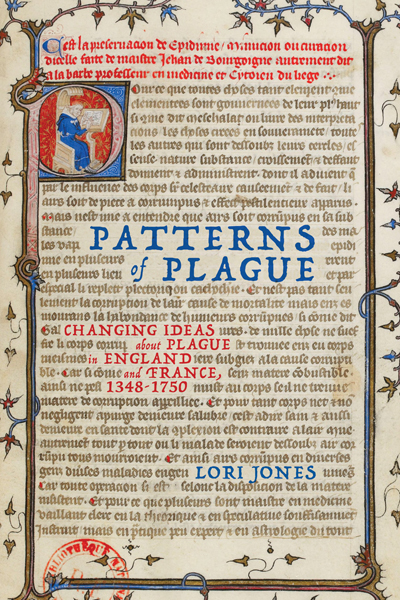
EBS member Lori Jones announces the publication of her book, Patterns of Plague: Changing Ideas about Plague in England and France, 1348–1750, which discusses various aspects of plague tractates including their transition from MS to print, shifting emphases, and their use of images. Members interested in receiving a discount are asked to contact Lori directly at ljone041@uottawa.ca.
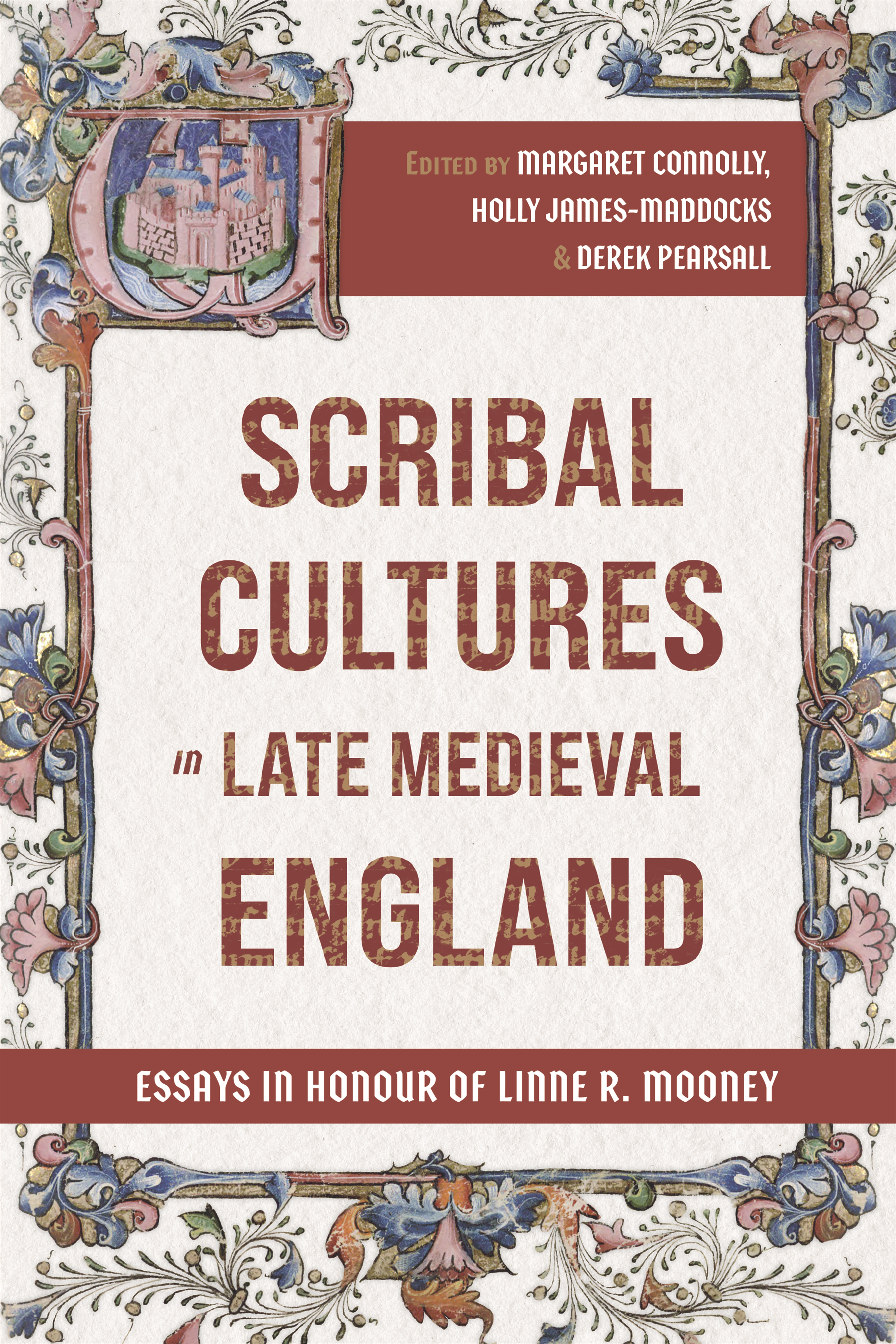
Description from the publishers site (here) Linne R. Mooney, Emeritus Professor of Palaeography at the University of York, has significantly advanced the study of later medieval English book production, particularly our knowledge of individual scribes; this collection honours her distinguished scholarship and responds to her wide-ranging research on Middle English manuscripts and texts.
The thirteen essays brought together here take a variety of approaches – palaeographical, codicological, dialectal, textual, art historical – to the study of the English medieval book and to the varied environments (professional, administrative, mercantile, ecclesiastical) where manuscripts were produced and used during the period 1300-1550. Acknowledging that books and readers are no respecters of borders, this collection’s geographical scope extends beyond England in the east to Ghent and Flanders, and in the west to Waterford and the Dublin Pale.
Contributors explore manuscripts containing works by key writers, including Geoffrey Chaucer, John Gower, John Wyclif, and Walter Hilton. Major texts whose manuscript traditions are scrutinized include Speculum Vitae, the Scale of Perfection, the Canterbury Tales, and Confessio Amantis, along with a wide range of shorter works such as lyric poems, devotional texts, and historical chronicles. London book-making activities and the scribal cultures of other cities and monastic centres all receive attention, as does the book production of personal miscellanies. By considering both literary texts and the letters, charters, and writs that medieval scribes produced, in Latin and Anglo-French as well as English, this collection celebrates Professor Mooney’s influence on the field and presents a holistic sense of England’s pre-modern textual culture.
Find a description of the book at the Penn Press site (here), and find details on acquiring it (and other Penn Press books) at 40% off (through June 15) at this site here.
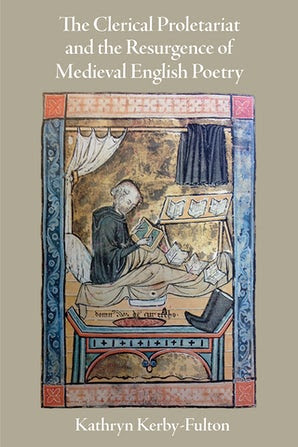
The Clerical Proletariat and the Resurgence of Medieval English Poetry
Find a description of the book at the Penn Press site (here), and NB: get a 40% discount on Penn Press books through June 15! Find full details at this page here.
From the publisher’s website: “This study examines the gift book practices of Elizabeth and Mary Tudor, both queens of England; it begins with pre-accession dedications given to each of them, moves to their typical patterns of New Year’s gift giving, explores two of Mary’s own translations, and ends on how they each engaged in translations that were published in 1548. It argues that Elizabeth’s dedications to her family, while participating in the tradition of giving books, were unique and in the dedications she intended not only to represent her loyalty but also to stabilize her position within the royal family.”
Until the advent of print, the sale of books had been primarily a bespoke trade, but printers faced a new sales challenge: how to sell hundreds of identical books to individuals, who had many other demands on their purses. This book contends that this forced printers to think carefully about marketing and potential demand, for even if they sold through a middleman—as most did—that wholesaler, bookseller, or chapman needed to be convinced the books would attract customers. Marketing English Books sets out, therefore, to show how markets for a wide range of texts were cultivated by English printers between 1476 and 1550 within a wider, European context: devotional tracts; forbidden evangelical books; romances, gests, and bawdy tales; news; pilgrimage guides, souvenirs and advertisements; and household advice. Through close analysis of paratexts—including title-pages, prefaces, tables of contents, envoys, colophons, and images—the book reveals the cultural impact of printers in this often overlooked period. It argues that while print and manuscript continued alongside each other, developments in the marketing of printed texts began to change what readers read and the place of reading in their lives on a larger scale and at a faster pace than had occurred before, shaping their expectations, tastes, and even their practices and beliefs.


 Early Book Society